Salik Tag UAE Complete Guide 2026: Gates, Fees, Tag, Fines & Recharge
All 10 Dubai Salik gates, dynamic pricing rules, tag registration, recharge methods, fines and toll-avoidance routes — everything you need to know in one place

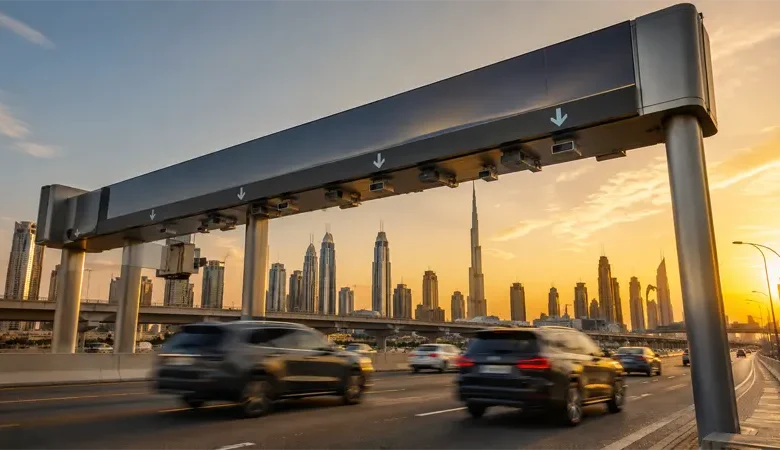
If you’ve ever driven in Dubai, you’ve already paid Salik — even if you didn’t realize it. The UAE’s electronic toll system silently deducts a few dirhams from your account every time you pass under one of the 10 toll gantries on Sheikh Zayed Road, Al Khail Road, Al Ittihad Road, or Dubai’s main bridges. For new residents, tourists with rental cars, and even long-time Dubai drivers, understanding exactly how Salik works in 2026 — including the new dynamic pricing, 5% VAT, and 10 active gates — can save you real money and prevent painful fines.
This complete Shaz Cars guide covers everything you need to know about Salik in 2026: how to get a Salik tag, all 10 toll gate locations, the new variable pricing schedule, every recharge method, the rules for tourists and rental cars, fines and how to avoid them, alternative routes to bypass tolls, and the most common mistakes that drain your account.
What Is Salik and How Does It Work?
Salik — Arabic for “open” or “clear” — is Dubai’s automated electronic toll collection system, launched by the Roads and Transport Authority (RTA) on 1 July 2007 to manage traffic flow on the emirate’s busiest highways. In 2022, Salik became a publicly listed company on the Dubai Financial Market (DFM: SALIK), operating Dubai’s toll infrastructure under a 49-year concession agreement.
The system uses two technologies working together. Radio Frequency Identification (RFID) tags attached to your vehicle’s windshield are detected by sensors as you pass under each toll gantry. Automatic Number Plate Recognition (ANPR) cameras simultaneously capture and read license plates as a backup, ensuring drivers without active tags are still identified for billing.
When your vehicle passes under a gate, the system automatically deducts the toll amount from your prepaid Salik account — no stopping, no slowing down, no cash, no physical barrier. According to Salik Company, this barrier-free system saves commuters an average of 44% in journey time on toll-monitored roads compared to congested toll-free alternatives.
How Many Salik Gates Are There in 2026?
As of 2026, Dubai operates 10 active Salik toll gates, up from the original 8 that existed for years. The two newest gates went live in November 2024 at strategic congestion points. There are no Salik gates in any other UAE emirate — only Dubai uses this system. Abu Dhabi operates a separate toll system called Darb. Sharjah, Ajman, Ras Al Khaimah, Fujairah, and Umm Al Quwain remain entirely toll-free in 2026.
All 10 Dubai Salik gates and their locations
Here is the complete list of every active Salik gate in Dubai, organized by road:
Sheikh Zayed Road (E11) — 4 gates
- Al Barsha Gate — Just before Mall of the Emirates. Heavy traffic from Al Barsha, Al Quoz, and shopping commuters.
- Al Safa North Gate — Near Al Safa Park, serving traffic toward central Dubai and the Jumeirah coastal area.
- Al Safa South Gate (added Nov 2024) — Between Al Meydan Street and Umm Al Sheif Street. Reduced congestion on this stretch by significant margins.
- Jebel Ali Gate — Near Ibn Battuta Mall, toward Jebel Ali Free Zone. Key gate for traffic between Dubai and Abu Dhabi.
Al Ittihad Road — 2 gates
- Al Mamzar North Gate — Serving traffic toward Sharjah from Dubai.
- Al Mamzar South Gate — Serving traffic from Sharjah toward Dubai.
Dubai Creek Bridges — 2 gates
- Al Garhoud Bridge Gate — Spans Dubai Creek between Deira (north) and Bur Dubai. Heavy peak-hour traffic.
- Al Maktoum Bridge Gate — Another major creek crossing serving the northern-southern Dubai corridor.
Other locations — 2 gates
- Airport Tunnel Gate — On Beirut Street, serving Dubai International Airport traffic.
- Business Bay Crossing Gate (added Nov 2024) — On Al Khail Road, easing congestion on a previously toll-free alternative route.
Salik Pricing 2026: Dynamic Variable Tolls
Salik introduced dynamic variable pricing on 31 January 2025, replacing the previous flat AED 4 per crossing. This is one of the most important changes UAE drivers need to understand. From 1 June 2026, a 5% VAT also applies to all Salik tolls and tag activation fees.
Here’s the complete 2026 pricing schedule:
| Time Window | Days | Toll per Gate (excluding VAT) |
|---|---|---|
| Peak Hours 6:00 AM – 10:00 AM 4:00 PM – 8:00 PM |
Monday – Saturday | AED 6 |
| Off-Peak Hours 10:00 AM – 4:00 PM 8:00 PM – 1:00 AM |
Monday – Saturday | AED 4 |
| Late Night (Free) 1:00 AM – 6:00 AM |
All days, 7 days a week | FREE |
| Sundays (excluding peak hours) 6:00 AM – 1:00 AM |
Sundays | AED 4 flat |
Ramadan pricing adjustments
During the holy month of Ramadan, Salik adjusts hours to accommodate fasting schedules:
- Peak Hours (9:00 AM – 5:00 PM): AED 6 per crossing
- Off-Peak Hours (7:00 AM – 9:00 AM & 5:00 PM – 2:00 AM): AED 4 per crossing
- Late Night Free (2:00 AM – 7:00 AM): FREE
For our detailed coverage of every Salik timing scenario — including specific gate timings, weekend schedules, and historical timing changes — see our complete Salik Timing in Dubai guide.
The 5% VAT update (June 2026)
From 1 June 2026, all Salik toll fees and tag activation fees are subject to 5% Value Added Tax (VAT), in line with UAE tax regulations. In practical terms:
- Peak hour crossing: AED 6 + AED 0.30 VAT = AED 6.30 effective
- Off-peak crossing: AED 4 + AED 0.20 VAT = AED 4.20 effective
- Salik tag: AED 100 + AED 5 VAT = AED 105 effective
The Two Special Rules That Save You Money
Two specific Salik rules can save you significant money if you understand them — and surprisingly many Dubai drivers don’t.
The Al Mamzar one-hour rule
If you pass through both Al Mamzar North and Al Mamzar South gates within one hour in the same direction, you are charged only once, not twice. This applies to drivers commuting between Dubai and Sharjah daily — you pay one toll, not two, for a round-trip section under one hour.
The Al Safa one-hour rule
The same one-hour rule applies to the two Al Safa gates on Sheikh Zayed Road. Pass through both Al Safa North and Al Safa South in the same direction within one hour, and you’re charged only once. This is particularly valuable for drivers using Sheikh Zayed Road for short trips around the Al Safa area.
How to Get a Salik Tag
Getting a Salik tag is straightforward. You can purchase one online, at a petrol station, or at an RTA Customer Happiness Center. The full cost is AED 100 (now AED 105 with VAT from June 2026), which includes the physical RFID tag (AED 50) plus AED 50 prepaid toll balance to start using immediately.
Documents required for Salik registration
To register and activate your Salik tag, prepare:
- Vehicle Registration Card (Mulkiya) — front and back copies
- Emirates ID of the registered vehicle owner
- UAE Driving License
- Active UAE mobile number
- Email address for account notifications
Where to buy a Salik tag
Online — Salik website or app (most convenient):
- Visit salik.ae or download the Smart Salik app (iOS / Android)
- Create an account using your Emirates ID and mobile number
- Click “Buy Tag” → enter vehicle details
- Pay AED 100 (or AED 105 with VAT from June 2026) by card
- Tag is delivered to your address by courier within 3-5 working days
- Once received, activate the tag through the app before first use
At petrol stations (instant pickup):
- ENOC, EPPCO, and ADNOC stations across Dubai stock Salik tags
- Purchase, then activate online via app or website using your account
At RTA Customer Happiness Centers:
- Al Barsha, Al Twar, Umm Ramool, Deira locations
- Staff-assisted registration if you prefer in-person help
How to install your Salik tag
Proper tag placement is critical — incorrectly installed tags cause scanning failures and violation fines. Install your tag:
- On the front windscreen, behind the rear-view mirror
- Centered vertically on the windshield (not too high or low)
- With the printed side facing outward (so it can be scanned from above)
- On a clean glass surface — wipe down before applying
- Press firmly for 30 seconds to ensure adhesion
Never move the tag between vehicles. Each tag is registered to a specific car. Using a tag on a different vehicle is a violation that results in fines.
The 10-Day Rule: First Crossing Without a Tag
If you drive through a Salik gate without a registered tag — for example, immediately after buying a used car that didn’t have a Salik tag — you have 10 working days to register a tag for your vehicle. The system records each crossing using ANPR camera technology and links the toll to your license plate.
Within those 10 days, purchase and activate your tag, then pay the accumulated toll balance through your account. No fine applies if you complete this within the grace window. After 10 days, fines start at AED 100 for the first violation, escalating to AED 400 for repeat offenses.
How to Recharge Your Salik Account
Salik recharges start at a minimum of AED 50, with all top-ups in multiples of AED 50. The maximum account balance is AED 50,000. Balance does not expire for 5 years, so don’t worry about losing unused credit.
All recharge methods available in 2026
Online and app methods (instant, no fees):
- Smart Salik App (iOS / Android) — login with UAE PASS
- Salik website (salik.ae) — credit/debit card or recharge card
- Dubai Drive App (RTA’s official app) — government services section
- Dubai Now App — government smart app supports Salik recharge
SMS recharge:
- Send your account number, recharge card number, and PIN to 5959
- Each SMS incurs a 30 fils mobile operator charge
Bank apps and online banking:
- Emirates NBD (formerly National Bank of Dubai)
- First Abu Dhabi Bank (FAB)
- Abu Dhabi Commercial Bank (ADCB)
- Dubai Islamic Bank (DIB)
- Abu Dhabi Islamic Bank (ADIB)
- Most major UAE banks support Salik through their mobile apps
Self-service kiosks:
- RTA Customer Happiness Centers across Dubai
- Selected malls and government service centers
- Some petrol stations
Recharge cards (offline, convenient):
- Available in AED 50, AED 100, and AED 200 denominations
- Sold at petrol stations (ENOC, EPPCO, ADNOC)
- Available at supermarkets like Carrefour, Spinneys, Lulu
- Scratch the back to reveal a 12-digit PIN
- Call 800-SALIK (800-72545) — select your language — enter PIN
Auto-recharge (recommended for daily drivers):
- Enable in the Smart Salik app under Account Settings
- Set a threshold (e.g., AED 25) and an auto-top-up amount (e.g., AED 100)
- Link a credit card — system automatically recharges when balance drops
- Eliminates the risk of insufficient-balance fines
Salik Fines and Violations
Salik fines are surprisingly easy to avoid but expensive when they accumulate. Understanding exactly what triggers a fine — and the timeframes for resolving them — saves frustration.
The main Salik violations and fines
| Violation | Fine | Grace Period |
|---|---|---|
| Crossing with insufficient balance (account at zero) | AED 50 | 5 working days to recharge |
| Crossing without a registered Salik tag | AED 100 (first offense), up to AED 400 (repeated) | 10 working days to register and pay tolls |
| Using a tag registered to another vehicle | AED 100+ | None — immediate violation |
| Failure to update vehicle info after ownership transfer | AED 100+ | Update within 30 days |
| Tampering with or removing tag | AED 400+ | None — immediate violation |
Important fine rules to know
- Only one violation per day for insufficient balance — even if you pass multiple gates with zero balance, you accumulate one daily fine, not one per gate
- Unpaid Salik fines block Mulkiya renewal — you cannot renew your vehicle registration until all Salik balances and fines are cleared. See our Mulkiya Renewal Dubai 2026 guide for details
- Unpaid fines also block ownership transfer — you cannot sell your car with outstanding Salik fines
- No SMS notifications for fines — check proactively via the Smart Salik app or salik.ae
- Disputing a fine doesn’t pause collection — pay first, then dispute through customer service to avoid additional penalties
Salik for Tourists and Rental Cars
If you’re a tourist or short-term visitor in Dubai, you almost certainly don’t need to worry about Salik directly. Rental cars come with active Salik tags pre-installed by the rental company, and toll charges are automatically billed to your credit card after you return the vehicle.
What tourists should know
- Confirm with the rental company that the Salik tag is active before driving away — checking the windshield is a good habit
- Tolls appear on your final bill after returning the car, typically with a small administrative fee (AED 10-30 per crossing depending on rental company)
- Some rental companies charge a daily “Salik service fee” (around AED 5-10/day) instead of per-crossing — read your contract
- You don’t need to recharge anything — the rental company manages the account
- Driving during 1 AM – 6 AM is genuinely free — useful for early airport drop-offs or late-night activities
If you bring your own car from another GCC country
Visitors from Saudi Arabia, Oman, Kuwait, Bahrain, or Qatar driving their own vehicles in Dubai must follow the 10-day rule — register for Salik within 10 working days of your first crossing, or face fines. Your home country’s RFID tag is not compatible with Dubai’s Salik system.
How to Avoid Salik Tolls Legally
Salik gates are placed on Dubai’s busiest highways, but several toll-free alternative routes can save commuters significant money — at the cost of slightly longer travel time. Here are the proven Salik-free routes for common commutes:
Avoiding Sheikh Zayed Road gates (Al Barsha, Al Safa North/South, Jebel Ali)
Alternative: E311 / Sheikh Mohammed Bin Zayed Road — completely toll-free, runs parallel to Sheikh Zayed Road. Adds 10-15 minutes during peak hours but saves AED 12-24 in tolls per round trip if you’d otherwise cross 3-4 gates.
Avoiding Al Garhoud Bridge and Al Maktoum Bridge gates
Alternative: Floating Bridge — connects Deira and Bur Dubai across Dubai Creek without any tolls. Slower and traffic-prone during peak hours but cost-free.
Avoiding the Airport Tunnel Gate
Alternative: D83 / Rebat Street — bypasses the airport tunnel toll. Slightly longer but commonly used by airport workers commuting daily.
Avoiding the Al Mamzar gates (Dubai-Sharjah commuters)
Alternative: Al Wahda Street, Al Damascus Street, or E311 — multiple parallel routes between Dubai and Sharjah. Best for off-peak hours when traffic is manageable.
Strategic toll planning tips
- Use Google Maps’ “Avoid Tolls” option when navigating — automatically routes you around Salik gates
- Schedule non-urgent trips during 1 AM – 6 AM — completely free passage on all gates
- Plan weekend errands on Sundays — flat AED 4 rate even during peak hours
- Use off-peak windows (10 AM – 4 PM, 8 PM – 1 AM) — AED 4 instead of AED 6 saves AED 2 per crossing
- Consider Dubai Metro for daily commuting along the Sheikh Zayed Road corridor — eliminates Salik costs entirely
- Carpool for daily commutes — split toll costs across passengers
How to Check Your Salik Balance
Several quick methods to check your current balance:
- Smart Salik App — fastest, real-time balance on home screen
- Salik website (salik.ae) — log in to see balance and transaction history
- Dubai Drive app — government services section shows linked Salik accounts
- SMS — send “BAL” to your registered Salik number
- Call 800-SALIK (800-72545) — 24/7 customer service line
- RTA Customer Happiness Centers — in-person balance check available
The Smart Salik app also lets you view your last 90 days of transactions, set low-balance alerts, and manage multiple vehicles under one account.
Common Salik Mistakes and How to Avoid Them
After years of helping Shaz Cars readers navigate UAE driving, these are the most expensive Salik mistakes we see repeatedly:
- Letting balance hit zero before topping up. Enable auto-recharge in the Smart Salik app and you’ll never pay an insufficient-balance fine again.
- Forgetting to update vehicle details after buying a used car. If the previous owner’s tag is still active in their account, tolls on your new car may be charged to them — until they dispute it and you get hit with backdated fines.
- Moving the tag between cars. Tags are vehicle-specific. Sharing one tag across multiple cars is a violation.
- Buying a car with unpaid Salik fines. Always check the seller has cleared all Salik balance before completing the transfer. Otherwise, the fines transfer to you.
- Driving with an obstructed or damaged tag. Heavily tinted windows can interfere with RFID detection. The ANPR camera still captures your plate, but the tag-less reading triggers violation processing.
- Ignoring SMS warnings about low balance. Salik does notify you via SMS when balance drops below the threshold — don’t dismiss these as spam.
- Renting out your car without updating Salik. If you rent your personal car to someone, their crossings deduct from your account.
Salik vs Darb: Understanding UAE’s Two Toll Systems
The UAE operates two completely separate toll systems:
- Salik (Dubai only) — 10 gates, dynamic pricing AED 4-6 per crossing, RFID + ANPR technology
- Darb (Abu Dhabi only) — 4 toll zones covering Abu Dhabi island and key arterials, flat AED 4 per crossing, free 11 PM – 7 AM for Abu Dhabi-registered vehicles, free on Fridays for Abu Dhabi-registered vehicles
The two systems are independent. A Salik tag does not work in Abu Dhabi; a Darb account does not work in Dubai. If you commute between the two emirates regularly, you need accounts with both systems. The Northern Emirates (Sharjah, Ajman, RAK, Fujairah, UAQ) remain toll-free in 2026 with no implementation date announced.
Frequently Asked Questions
How much does Salik cost per crossing in 2026?
Salik costs AED 6 per crossing during peak hours (6 AM-10 AM and 4 PM-8 PM, Monday-Saturday) and AED 4 during off-peak hours (10 AM-4 PM and 8 PM-1 AM). Late night crossings between 1 AM and 6 AM are completely free. Sundays charge a flat AED 4 except during free overnight hours. From 1 June 2026, a 5% VAT also applies, making the effective rates AED 6.30 (peak) and AED 4.20 (off-peak).
How many Salik gates are there in Dubai 2026?
Dubai has 10 active Salik toll gates in 2026. Two new gates — Business Bay Crossing on Al Khail Road and Al Safa South on Sheikh Zayed Road — were added in November 2024, bringing the total from 8 to 10. Salik gates exist only in Dubai; no other UAE emirate uses this system.
How do I get a Salik tag?
You can buy a Salik tag online at salik.ae, through the Smart Salik mobile app, at any ENOC, EPPCO, or ADNOC petrol station in Dubai, or at RTA Customer Happiness Centers. The total cost is AED 100 (AED 105 from June 2026 with VAT), which includes the physical RFID tag (AED 50) and AED 50 prepaid toll balance. You’ll need your Mulkiya, Emirates ID, driving license, and active UAE mobile number.
What happens if I drive through a Salik gate without a tag?
The ANPR camera system captures your license plate and links the toll to your vehicle’s registered owner. You have 10 working days to register a Salik tag and pay accumulated tolls without penalty. After 10 days, fines start at AED 100 for first offense, escalating to AED 400 for repeat violations. Rental cars come with active tags pre-installed.
What is the minimum Salik recharge amount?
The minimum Salik recharge is AED 50, and all top-ups must be in multiples of AED 50. The maximum account balance allowed is AED 50,000. Balance does not expire for 5 years from the date of recharge, so credit is not lost even with infrequent use.
Are there really free hours on Salik?
Yes. All 10 Dubai Salik gates are completely free between 1:00 AM and 6:00 AM, every day of the week including weekends and public holidays. During Ramadan, the free window adjusts to 2:00 AM – 7:00 AM. This is the only window where you can drive through Salik gates with zero charge.
Do tourists need to register for Salik?
Tourists driving rental cars in Dubai do not need to register for Salik separately. Rental companies pre-install active Salik tags on all rental vehicles, and toll charges are automatically billed to your credit card after returning the car (usually with a small administrative fee per crossing). Tourists driving their own vehicles from other GCC countries must register for Salik within 10 working days of first crossing.
How do I check my Salik balance?
The fastest way is the Smart Salik mobile app, which shows real-time balance on the home screen. You can also log into salik.ae, use the Dubai Drive app, send an SMS, or call 800-SALIK (800-72545). The Smart Salik app additionally shows 90-day transaction history and allows you to enable low-balance alerts.
What is the Salik fine for insufficient balance?
If you cross a Salik gate with insufficient or zero balance, you have 5 working days to recharge your account and pay the missed toll. If not paid within this window, a fine of AED 50 applies. Only one daily violation accrues regardless of how many gates you cross with zero balance — but each day of continued non-payment adds another AED 50.
Can I avoid Salik tolls in Dubai?
Yes, several toll-free alternatives exist. The main bypass is Sheikh Mohammed Bin Zayed Road (E311) parallel to Sheikh Zayed Road, which avoids the Al Barsha, Al Safa, and Jebel Ali gates. The Floating Bridge bypasses Al Garhoud and Al Maktoum bridges. D83/Rebat Street avoids the Airport Tunnel. Al Wahda Street avoids the Al Mamzar gates. Use Google Maps’ “Avoid Tolls” option to automatically route around Salik gates.
Does Salik work in Abu Dhabi or Sharjah?
No. Salik operates only in Dubai. Abu Dhabi uses a separate toll system called Darb, which requires its own account and tag. Sharjah, Ajman, Ras Al Khaimah, Fujairah, and Umm Al Quwain are entirely toll-free in 2026 with no toll system planned or announced.
What is the special rule for Al Mamzar and Al Safa gates?
The Al Mamzar one-hour rule: if you pass through both Al Mamzar North and Al Mamzar South gates in the same direction within one hour, you are charged only once, not twice. The same rule applies to Al Safa North and Al Safa South gates on Sheikh Zayed Road. This benefits commuters making round trips through these paired gates.
Does Salik balance expire?
Salik balance does not expire for 5 years from the date of recharge. Even if you leave Dubai temporarily or use the system infrequently, your credit remains available. However, refunds for unused balance are not provided — use it up before leaving Dubai permanently by driving through gates or transferring balance to another registered vehicle.
Can I add multiple vehicles to one Salik account?
Yes. A single Salik account can manage multiple vehicles. Add additional vehicles through the Smart Salik app or salik.ae by providing each vehicle’s Mulkiya details. Each vehicle gets its own tag, but all charges are deducted from the shared account balance.
What happens to Salik fines if I sell my car?
Any unpaid Salik fines or balances must be cleared before you can transfer vehicle ownership. RTA’s system blocks ownership transfer until all Salik obligations are settled. If you forget to update vehicle ownership in your Salik account, future tolls on the car may still be charged to your account — always update Salik immediately after selling.
The Bottom Line
Understanding Salik in 2026 comes down to three things: get a tag if you don’t have one, enable auto-recharge to avoid balance fines, and use the time-of-day pricing to your advantage. The 1-6 AM free window, off-peak savings, and Sunday flat rate combined can cut a regular commuter’s monthly Salik costs by 30-40% without adding any travel time.
For deeper coverage of specific Salik timing scenarios, see our Salik Timing in Dubai guide. For related practical UAE driving topics, check our complete guides on Mulkiya renewal in Dubai 2026, Tasjeel vehicle inspection (coming soon), and car ownership transfer in Dubai (coming soon).
Got a Salik question we haven’t covered? Email tips@shazcars.com — we update this guide whenever Salik or RTA announces changes.