What to Do After a Car Accident in UAE 2026: Police Reports, Insurance & Step-by-Step Guide
Pink, green and white reports explained, when to call 999, 4 ways to file a minor accident report, insurance claim process and common mistakes — everything UAE drivers need

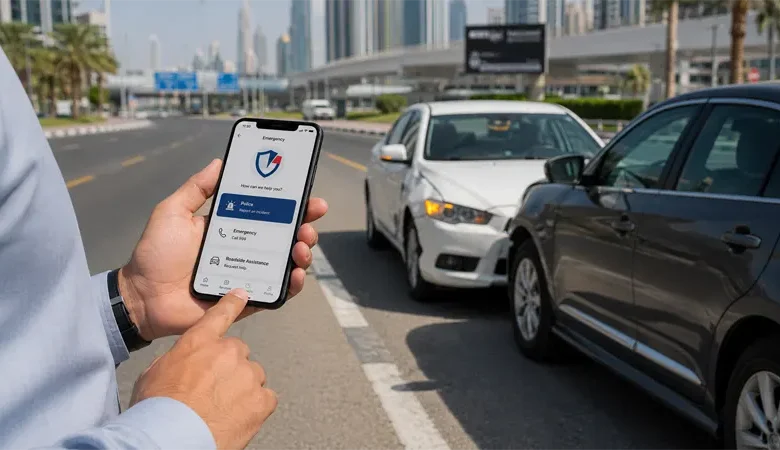
If you just had a car accident in the UAE — first, take a breath. Most accidents in Dubai and the wider UAE are minor, manageable, and resolved with a quick police report and insurance claim. Knowing exactly what to do in the next 30 minutes is the difference between a smooth recovery and weeks of confusion, denied insurance claims, and unexpected fines.
This complete Shaz Cars guide walks you through every step of what to do after a car accident in the UAE 2026 — from the immediate actions at the scene, when to call 999 versus using the Dubai Police app, the meaning of the pink, green, and white police reports, the four different ways to file a minor accident report in 2026, the full insurance claim process, and the common mistakes that can void your coverage entirely.
Quick Action Steps (Read First If You’re at the Scene)
If you’re reading this immediately after an accident, follow these five steps in order:
- Check for injuries — If anyone is injured, call 999 immediately for an ambulance and police
- Move to safety — If the accident is minor with no injuries, move vehicles to the roadside; if major, leave vehicles in place and turn on hazard lights
- Do NOT drive away — Leaving the scene is illegal: AED 500 fine, 6 black points, and vehicle confiscation for 7 days
- Document the scene — Take clear photos of all vehicles, damage, license plates, and the road position
- Report the accident — For major accidents, wait for police; for minor accidents, use the Dubai Police app (instructions below)
Now let’s go through everything you need to know in detail.
Step 1: Immediate Actions at the Scene
Check for injuries first — call 999 if needed
Before worrying about paperwork, vehicles, or fault, check whether anyone is injured. Your safety and the safety of others always comes first.
- If anyone is unconscious, bleeding heavily, or seriously injured, call 999 immediately for ambulance and police
- If you suspect spinal or neck injuries, do not move the injured person unless they’re in immediate danger from fire or traffic
- If you feel pain or shock yourself, stay seated until help arrives — adrenaline can mask serious injuries
- Even if injuries seem minor, request medical assessment — symptoms can appear hours later
Position your vehicle safely
The next priority is preventing a second accident:
- Minor accident, no injuries: Move both vehicles to the roadside or hard shoulder to avoid blocking traffic. UAE law allows and encourages this for minor incidents. Take photos of the original positions before moving if possible.
- Major accident or injuries: Leave vehicles in place and turn on hazard lights immediately. Set up the warning triangle behind the vehicles if you have one (mandatory equipment for vehicle inspection).
- Vehicle on fire or fuel leak: Get everyone at least 100 meters away from the vehicles immediately. Call 999.
- On a highway: If possible, exit the vehicle on the passenger side away from traffic, and move behind any roadside barrier.
Never leave the scene
This is critical: under UAE law, driving away from any accident — even a small parking lot bump — carries severe penalties:
- AED 500 fine
- 6 black points on your driving license
- Vehicle confiscation for 7 days
- If you caused serious injury and left the scene: court case, possible driving ban, vehicle confiscation for minimum 60 days, potential jail time
If you accidentally hit a parked car or a stationary object (wall, pillar, fence) and the owner isn’t around — you still must report it. Leave a note with your phone number, take photos, and file a damage report with Dubai Police. Driving away from any accident is a hit-and-run, regardless of how minor.
Step 2: Decide — Major or Minor Accident?
The reporting method depends entirely on this classification. Get it right.
Major accidents (call 999 / police to scene)
Call Dubai Police immediately and wait for them to arrive if any of these apply:
- Any injuries (even seemingly minor cuts or bruises)
- Major vehicle damage (vehicle not drivable)
- Multiple vehicles involved (3+ cars)
- Dispute about fault between drivers
- Suspicion of drunk driving or driver under the influence
- Hit and run by other party
- Foreign drivers or rental vehicles where details are unclear
- Damage to public property (street furniture, traffic signals, barriers)
- Accident involving a commercial vehicle, taxi, or government vehicle
Minor accidents (no need to call 999)
You can self-report via the Dubai Police app or other digital channels (covered below) if ALL of these are true:
- No injuries to any party
- All vehicles remain drivable
- Damage is only cosmetic (scratches, dents, minor crumpling)
- Both drivers agree on what happened and who is responsible
- All drivers have valid UAE driving licenses and Mulkiyas
- Only two vehicles involved
Dubai Police actively encourages drivers NOT to call 999 for minor fender benders — patrol cars are dispatched for serious incidents. Use the app instead, free up emergency resources, and save yourself time.
Step 3: Document Everything Before Police Arrive (or Before Self-Reporting)
Your photos are evidence. The more thorough you are, the smoother the insurance claim. Take photos of:
- Wide shots showing the entire accident scene including road layout
- Close-ups of damage on all vehicles involved, from multiple angles
- All license plates clearly readable
- Both Mulkiyas (vehicle registration cards) — front and back
- Both drivers’ licenses — front and back
- Insurance certificates of all involved vehicles
- Position of vehicles before moving them (if you must move them for safety)
- Skid marks, debris, broken glass showing the impact point
- Traffic signs, signals, or road markings relevant to the accident
- Witnesses — note their names and phone numbers if any
- The other driver (not their face — just enough to identify them legally)
If your phone has dashcam footage, save it immediately to cloud storage so it can’t be lost or overwritten.
What to exchange with the other driver
- Full name (as on driving license)
- Mobile number
- Emirates ID number (or photograph of their Emirates ID)
- Driving license details
- Vehicle registration (Mulkiya) details
- Insurance company name and policy number
Critical: Stay calm and polite. Never admit fault at the scene, even if you believe you were responsible. Liability is determined by police based on evidence, and admitting fault verbally can complicate or void your insurance coverage. Simply say “Let the police decide.”
Step 4: Report the Accident — 4 Ways in 2026
For minor accidents, Dubai Police offers four ways to file a report without calling 999. Pick whichever is fastest based on where you are.
Method 1: Dubai Police App (Fastest — 5-10 minutes)
The Dubai Police mobile app is the quickest way to file a minor accident report.
- Download the Dubai Police app from App Store or Google Play
- Log in using UAE PASS or your Emirates ID
- Open the services menu and select “Minor Traffic Accident Report” or “Simple Accident Report”
- Activate GPS to share accident location
- Enter vehicle details for all parties (plate numbers and emirate)
- Upload at least 4 clear photos from different angles
- Enter driving license numbers and Emirates ID details
- Confirm phone number and email for report delivery
- Pay service charges via debit/credit card
- The report is typically issued within 24 hours via SMS and email
Method 2: Dubai Now App
The Dubai Now smart government app also supports accident reporting through its integration with Dubai Police services.
- Open Dubai Now app
- Log in using UAE PASS (auto-detects your profile and location)
- Go to “Police” section
- Select “Minor Traffic Accident Report”
- Follow the same steps — enter details, upload photos, submit
- Receive report via email
Method 3: Smart Police Stations (SPS)
Dubai has 33 Smart Police Stations operating 24/7 across the emirate with no human intervention required. They look like small standalone buildings or kiosks at convenient locations (malls, petrol stations, parking areas).
- Locate your nearest Smart Police Station (visible on Dubai Police app map)
- Scan your Emirates ID (or passport for visitors)
- Select “Traffic Accidents” from the main menu
- Follow on-screen instructions to enter accident details
- Upload or scan clear photos of vehicle damage
- Submit and receive printed police report instantly
Method 4: ENOC On-The-Go Service
Dubai Police partnered with ENOC (Emirates National Oil Company) to allow accident reporting at select petrol stations.
- Drive to a participating ENOC station (locations on Dubai Police app)
- Notify the trained ENOC representative about the accident
- Provide all required details and photos
- Representative submits the report on your behalf
- You receive the accident report by SMS or email
This is especially useful if your vehicle needs refueling or you’re stopping for other reasons after a minor incident.
The Pink, Green, and White Reports Explained
This is the part many UAE drivers find confusing. Dubai Police uses a color-coded accident report system to communicate fault at a glance, since reports are issued in Arabic.
| Color | Meaning | What It Means for You |
|---|---|---|
| Pink Form | You are AT FAULT | You caused the accident. Your insurance covers the other party’s damage; you pay any policy excess. You also pay the AED 520 accident filing fee. |
| Green Form | You are NOT at fault | The other driver was responsible. Submit the green report to the other driver’s insurance company for repairs. No filing fee for you. |
| White Form | No fault determined | Either no party is responsible (e.g., unavoidable circumstances), or further investigation is needed. Some sources also use white when the at-fault driver is unknown (such as in some hit-and-run cases or parked car damage). |
Important terminology note: Some insurance companies and newer sources use the term “Red” instead of “Pink” for the at-fault form. Officially Dubai Police uses Pink — but if your insurer says “red report,” they mean the same thing: at fault.
What if you disagree with the police decision?
If the police issue you a Pink report and you believe you weren’t at fault, do not argue with the officers at the scene. This can make things worse, including potentially adding “obstructing police duty” to your record.
Instead, accept the report calmly, then formally dispute it through these channels:
- Visit your nearest Dubai Police station within 30 days
- File a formal objection through the Dubai Police website or app
- Provide evidence (dashcam footage, witness statements, photos)
- Contact a UAE traffic lawyer if the case involves significant injury or liability
Step 5: Vehicle Recovery and Drive-Away
After getting the police report, decide whether your car is safe to drive:
- If drivable: Drive directly to your insurance-approved garage. Don’t make unnecessary stops — driving with damaged headlights, broken signals, or compromised brakes can result in additional fines.
- If not drivable: Call your insurance company. Comprehensive policies typically include free recovery (tow truck). Third-party-only policies may charge for towing.
- If you don’t feel safe driving: Even if your car is technically drivable, post-accident shock and adrenaline are real. Call a friend or use a taxi/ride-hail. Your car can be moved later.
Step 6: File Your Insurance Claim
The police report is your golden ticket for the insurance claim. Without it, no UAE insurer will process repairs. Here’s the standard claim workflow:
- Notify your insurance company within 24 hours of the accident (most policies require this)
- Submit your full claim within 7 days of the incident
- Required documents:
- Original police accident report (or digital copy from Dubai Police app)
- Mulkiya (vehicle registration card)
- Valid UAE driving license
- Emirates ID
- Insurance policy document
- Claim intimation slip
- Modification certificate (if vehicle has been modified)
- Photos of damage
- Insurance assigns an approved garage for repairs — you must use this garage, not your own preferred shop
- Workshop creates repair estimate (1-4 days)
- Insurance approves repairs — typically 1 day for minor damage, 2 days for major damage
- Loss adjuster may visit if repair costs are high (verifies claim legitimacy)
- Vehicle repaired at approved network workshop
- Pay your policy excess if at fault — typically AED 500-1,500 depending on policy
- Collect your repaired vehicle
Critical timing note: Your police accident report is valid for 3 months from the date of issuance. All repairs must be completed within this window. After 3 months, the report expires and the claim becomes invalid.
Special Scenarios and What to Do
Damaged parked car (you weren’t there)
If you return to find your parked car damaged with the other driver gone:
- Take photos immediately before moving the vehicle
- Check for notes left under wipers
- Note any nearby surveillance cameras (mall parking, building security)
- Call Dubai Police or visit a Smart Police Station
- You’ll receive a damage report (around AED 50) — usually white form since the at-fault party is unknown
- Submit to your insurance — most comprehensive policies cover this under “hit and run” or “unknown driver” provisions, though your excess will apply
You hit a parked car (owner not present)
Even though it’s tempting to drive away — don’t. Hit and run penalties are severe.
- Leave a note with your name and phone number on the windshield
- Take photos of both vehicles
- Call Dubai Police to report the damage
- You’ll be classified as the at-fault party, but this is far better than the hit-and-run consequences
You hit an object (wall, pillar, fence, etc.)
Solo accidents with stationary objects still require a police report — without one, you can’t get insurance repairs done.
- Call Dubai Police or use the app
- You’ll receive a damage report
- Submit to insurance for repair authorization
The other driver flees the scene
If the at-fault party flees after hitting you:
- Photograph their license plate immediately if possible
- Note vehicle make, model, color
- Look for witnesses and note their details
- Call 999 immediately and report the hit and run
- Dubai Police uses extensive traffic camera networks and can often identify the fleeing vehicle
- Your insurance still pays for repairs under comprehensive coverage with a green form
The other driver is uninsured
This is rare in UAE (insurance is mandatory) but possible with expired policies:
- File the police report normally
- If you have comprehensive coverage, your insurance handles it
- The at-fault uninsured driver faces significant penalties from authorities
- Your insurer may pursue them separately for reimbursement
Tourist or visitor accidents
If you’re a visitor driving a rental car:
- Contact the rental company’s emergency line first (usually printed in the car)
- Call Dubai Police or use the app — same process as residents
- Bring your international driving permit and passport instead of UAE Emirates ID
- The rental company’s insurance handles claims (you’ll typically pay an excess)
- Never sign anything from the rental company until you’ve reviewed it — some hidden charges may apply
Accident involving a taxi or commercial vehicle
- Always call 999 — these usually require police on scene
- Taxi accidents often involve passenger injury claims, requiring formal investigation
- Note the taxi number, company, and driver details carefully
Common Mistakes That Void Insurance Coverage
UAE insurers reject claims regularly for these avoidable mistakes:
- Not getting a police report — No report = no insurance coverage, period. This is the #1 reason claims are rejected.
- Reporting the accident after 24 hours — Many policies require notification within 24 hours of the accident. Delays can void coverage.
- Filing the claim after 7 days — The standard claim filing window is 7 days from the accident date.
- Repairing the car before getting insurance authorization — Common trap. You think you’re being efficient, but the insurer voids the claim.
- Using a non-approved garage — Insurance only covers repairs at their network garages.
- Driving under the influence — Zero alcohol tolerance in UAE. Any alcohol detection voids insurance coverage entirely.
- Driving without a valid license — Expired UAE license or invalid international permit voids coverage.
- Admitting fault at the scene — Verbal admissions can be used against you in insurance disputes.
- Modifying the vehicle without insurer notification — Aftermarket modifications must be declared. Undeclared modifications void claims.
- Driving for commercial purposes on a personal policy — Ride-sharing or delivery driving requires commercial insurance.
- Lending the car to an unlisted driver — Some policies require all drivers to be named. Check your policy.
- Not maintaining the vehicle — Accidents caused by clearly negligent maintenance (bald tires, broken brakes) can result in claim denial.
Abu Dhabi and Other Emirates: Key Differences
This guide focuses on Dubai’s procedures, but if you have an accident in another emirate:
Abu Dhabi
- Saaed is the outsourced traffic accident response service that handles initial scene response (similar role to Dubai Police but a separate agency)
- Use the Abu Dhabi Police app for minor accident reporting
- Call 999 for serious accidents — same number across UAE
- The pink/green/white color codes are similar in concept
Sharjah, Ajman, RAK, Fujairah, UAQ
- Each emirate’s police force handles accidents in their jurisdiction
- Call 999 for any accident — operators route to the correct emirate
- Police report colors and meanings are consistent UAE-wide
- Your Dubai-issued insurance covers accidents anywhere in UAE
Filing Fees and Costs
| Item | Cost (AED) | Who Pays |
|---|---|---|
| Minor accident filing fee | ~520 | At-fault driver (pink form recipient) |
| Damage report (object/parked car) | ~50 | The reporting driver |
| Replacement police report copy | ~50 | Whoever requests |
| Insurance policy excess (at fault) | 500-1,500 | Policy holder |
| Hit and run fine | 500 | The driver who fled |
| Driving with expired license | 400-1,000 | The driver |
| Driving without insurance | 500-1,000 | The driver |
| Hit and run causing serious injury | Court-determined | The driver who fled |
After Your Vehicle Is Repaired
Once you collect your repaired vehicle:
- Inspect the repair work carefully at the garage before signing off — paint match, panel gaps, mechanical function
- Test drive briefly in the garage parking area if possible — check brakes, steering, alignment
- Verify your Salik tag is intact and properly fitted (often dislodged during body repairs)
- If your vehicle is 3+ years old, the repair may require a fresh Tasjeel inspection if structural work was done. See our Tasjeel inspection guide
- Keep all paperwork — police report, claim documentation, repair invoices — for at least 2 years
- Your insurance premium may increase at renewal if you were at fault
Frequently Asked Questions
What do the pink, green, and white reports mean in Dubai?
The Dubai Police accident report system uses color codes to communicate fault: Pink form means you are AT FAULT (responsible for the accident). Green form means you are NOT at fault (the other party caused the accident). White form means no fault was determined or further investigation is needed, often used when the at-fault party is unknown. Some insurance companies use the term “Red” instead of “Pink” but the meaning is identical.
Do I need to call 999 for a minor car accident in Dubai?
No. Dubai Police actively encourages drivers NOT to call 999 for minor accidents (no injuries, vehicles drivable, cosmetic damage only). Instead, use the Dubai Police app, Dubai Now app, a Smart Police Station, or an ENOC On-The-Go station. Call 999 only for accidents involving injuries, major damage, dispute over fault, or hit-and-run situations.
What happens if I drive away from an accident in UAE?
Driving away from any accident is a serious offense in the UAE. Penalties include AED 500 fine, 6 black points on your driving license, and vehicle confiscation for 7 days. If you caused serious injury and fled, penalties include court proceedings, potential driving ban, vehicle confiscation for a minimum of 60 days, and possible jail time. Even minor parking lot bumps require a police report — never drive away.
How long do I have to report an accident in UAE?
You should report the accident as soon as possible — ideally immediately at the scene. UAE law requires reporting any accident to the police, and most insurance policies require notification within 24 hours. The full insurance claim must typically be filed within 7 days. The police report itself is valid for 3 months after issuance, during which all repairs must be completed.
How much does it cost to file an accident report in Dubai?
The at-fault driver (pink form recipient) pays approximately AED 520 as the filing fee. A damage report (for hitting parked cars or objects) costs around AED 50. The not-at-fault driver (green form recipient) typically pays nothing for the report itself. Insurance policy excess fees are separate (typically AED 500-1,500 if you’re at fault, depending on your policy).
What documents do I need at the accident scene?
Keep these documents with you while driving: your valid UAE driving license (or international driving permit for visitors), Emirates ID, Mulkiya (vehicle registration card), and current insurance certificate. Police officers will need to verify all of these to file the accident report properly.
Can I report a minor accident without going to a police station?
Yes, four ways: the Dubai Police mobile app (fastest, 5-10 minutes from your phone), the Dubai Now app (uses UAE PASS), one of the 33 Smart Police Stations across Dubai (24/7 self-service kiosks), or an ENOC On-The-Go station (select ENOC petrol stations). All four methods produce a legally valid accident report.
What if I disagree with the police’s fault decision?
Do not argue with police at the scene — this can worsen your situation. Accept the report calmly and formally dispute it within 30 days by visiting a Dubai Police station, filing an objection through the Dubai Police website or app, and providing evidence such as dashcam footage, witness statements, and photos. For significant cases, consult a UAE traffic lawyer.
Will my insurance cover the accident if I caused it?
Yes, if you have comprehensive insurance, your policy covers both your damage and the other party’s damage (up to policy limits). You’ll pay your policy excess (typically AED 500-1,500) but the bulk of repair costs are covered. Third-party-only insurance covers only the OTHER driver’s damage — your own car’s repairs come out of your pocket.
How long does my accident report remain valid?
The Dubai Police accident report is valid for 3 months from the date of issuance. All vehicle repairs must be completed within this 3-month window. After 3 months, the report expires and your insurance claim becomes invalid, requiring a fresh process if repairs haven’t been done.
What if the other driver doesn’t have insurance?
This is rare in UAE since insurance is mandatory, but possible with expired policies. File the police report normally. If you have comprehensive insurance, your insurer handles your damage and may pursue the uninsured driver separately for reimbursement. The uninsured driver faces significant fines and potential vehicle confiscation. If you have third-party-only coverage, you may need to take civil action against the at-fault driver yourself.
What about my car if I’m a tourist driving a rental in Dubai?
Contact your rental company’s emergency line first (usually printed in the vehicle). Then call Dubai Police or use the app to file the report — same process as residents but bring your passport and international driving permit instead of Emirates ID. The rental company’s insurance handles claims; you’ll typically pay an excess amount. Read your rental agreement carefully before signing any post-accident paperwork from the rental company.
Should I take photos before or after moving my car?
Ideally both, if possible. Take quick wide-angle photos showing the original positions of all vehicles, then move to safety if the accident is minor and no injuries. Move only if it’s safe to do so without disturbing critical evidence. For major accidents or injuries, leave vehicles in place and let police document the scene.
Can I refuse to give my details to the other driver?
No. UAE law requires drivers involved in accidents to exchange identification, insurance, and vehicle details. Refusing can result in additional fines and complications. However, you can request the other driver wait until police arrive to exchange details in their presence if you feel safer with that approach.
The Bottom Line
Most accidents in the UAE — even seemingly serious ones — are manageable when you follow the right steps. The system is designed to be efficient: police reports are issued quickly, insurance claims process within days, and the four digital reporting methods mean you rarely need to wait for a patrol car for minor incidents.
The single most important rule: never drive away from any accident, no matter how minor. Everything else can be fixed; a hit-and-run charge cannot be easily reversed.
Save the Dubai Police app and the 999 emergency number to your phone today, before you need them. Keep your driving license, Mulkiya, Emirates ID, and insurance certificate readily accessible in your vehicle. And remember: the police, insurance companies, and emergency services are all there to help you. Stay calm, follow the steps, and the situation will resolve faster than you think.
For related UAE driving guides, see our complete coverage of Mulkiya renewal in Dubai 2026, Salik Tag UAE, Tasjeel vehicle inspection, and car ownership transfer in Dubai.
Got an accident-related question we haven’t covered? Email tips@shazcars.com — we update this guide as Dubai Police procedures evolve.
This article provides general information based on publicly available sources. For specific legal advice regarding accident liability, insurance disputes, or serious injury cases, consult a qualified UAE traffic lawyer.